
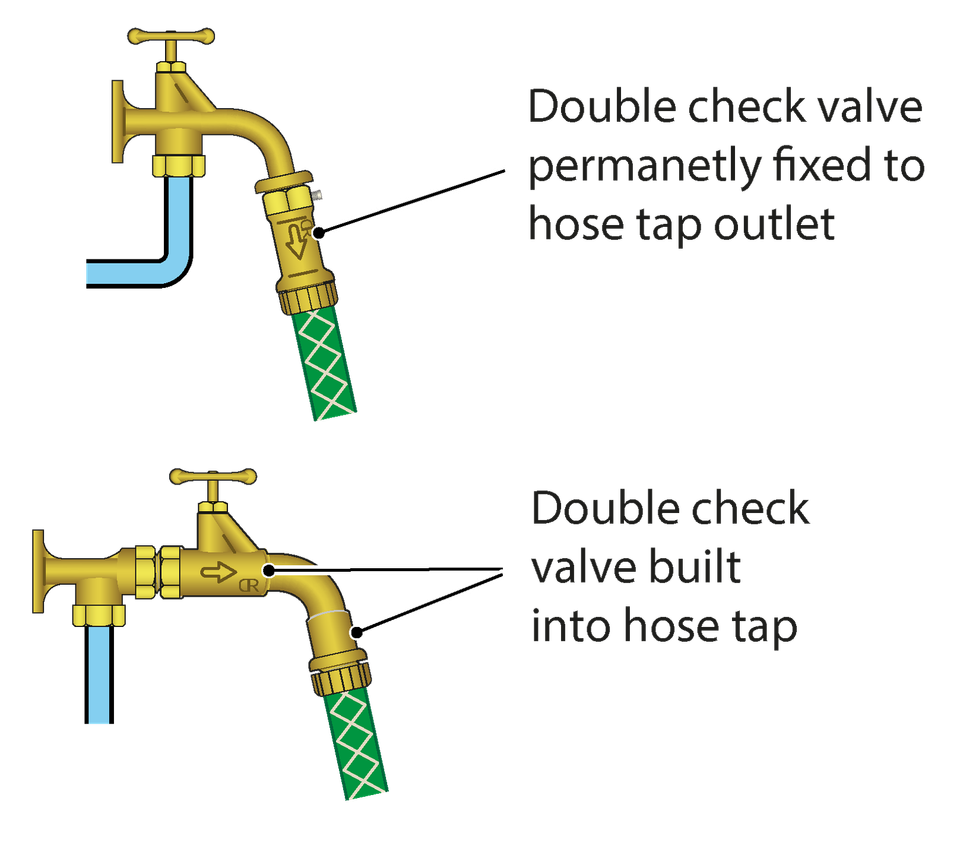
A hose union tap incorporating a double check valve either at the inlet or out outlet provides a form of backflow protection called a Type HUK1 but can only be lawfully used if installed prior to 1st July 1999.
As these taps only provide fluid category 3 back pressure and back siphonage backflow protection, they are typically found in domestic properties. As check valves used outdoors can be prone to freezing and subsequent failure, should such a tap needed to be replaced a like for like product could be used but ideally it should be changed for a standard hose union taps and the double check valve relocated inside the property and protected from freezing.
In premises built after 1st July 1999 if a double check valve is to be used as point of use backflow protection for a hose union tap categorised as a fluid category 3 risk, this must be installed inside the property and if required protected from freezing.
To improve this information please give us your feedback >
Uncontrolled if downloaded. This is informative, non-statutory guidance and intended for general guidance purposes only; it is subject to change.
Compliance with this information should not be relied upon as guaranteeing no enforcement action will be taken by water undertakers. Water Regs UK accepts no liability for loss, indirect or consequential loss arising from or in connection with this guidance document.
 All hose union taps must be supplied via an appropriate and adequate form of backflow protection rated equal to or higher than the highest contamination risk (fluid category) downstream for the type of backflow (back pressure or back siphonage) it is likely to be exposed to.
As some backflow prevention arrangements and devices have operational limitations you should always check with the local water undertaker to make sure they are suitable for the intended application.
Where the local water undertaker requires it zone or wholesite backflow protection should be installed.
To improve this information please give us your feedback >
Uncontrolled if downloaded. This is informative, non-statutory guidance and intended for general guidance purposes only; it is subject to change.
Compliance with this information should not be relied upon as guaranteeing no enforcement action will be taken by water undertakers. Water Regs UK accepts no liability for loss, indirect or consequential loss arising from or in connection with this guidance document.
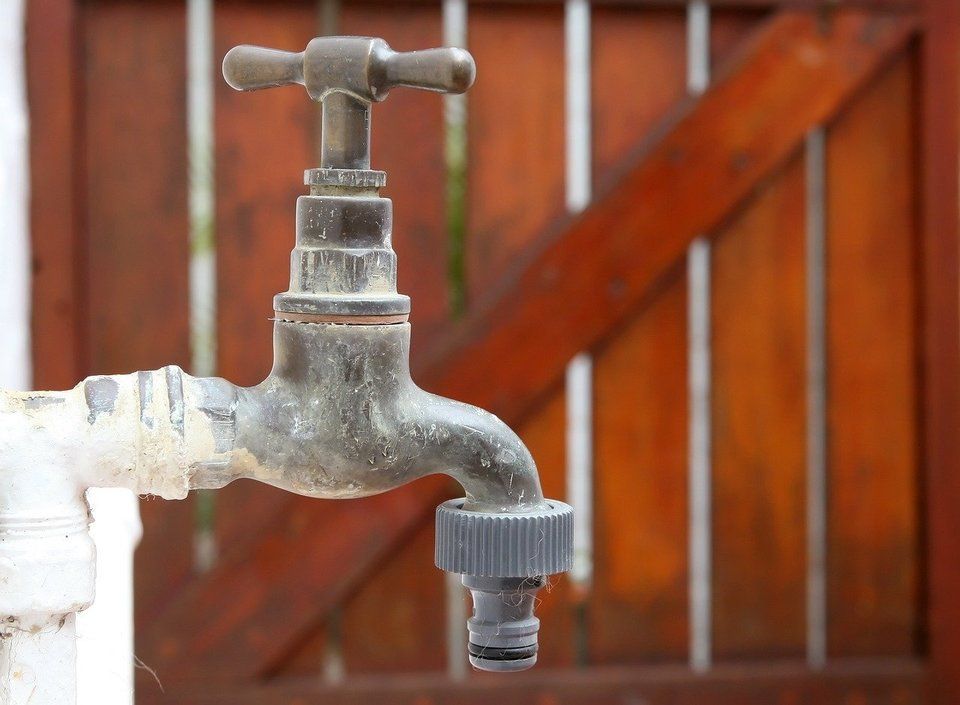
A hose union tap is a tap to which a hose can be connected. Hoses attached to hose union taps are considered to be a high contamination risk. This is because backflow via a hosepipe submerged in a bucket, trough, puddle, drain or pond is a very real possibility.
Conversely a tap to which a hose cannot be connected is called a bib tap.
To improve this information please give us your feedback >
Uncontrolled if downloaded. This is informative, non-statutory guidance and intended for general guidance purposes only; it is subject to change.
Compliance with this information should not be relied upon as guaranteeing no enforcement action will be taken by water undertakers. Water Regs UK accepts no liability for loss, indirect or consequential loss arising from or in connection with this guidance document.
To help prevent waste handheld hoses should be fitted with a control device, such as a trigger with a self-closing mechanism.
Please note: a control device is not a recognised form of backflow protection.
To improve this information please give us your feedback >
Uncontrolled if downloaded. This is informative, non-statutory guidance and intended for general guidance purposes only; it is subject to change.
Compliance with this information should not be relied upon as guaranteeing no enforcement action will be taken by water undertakers. Water Regs UK accepts no liability for loss, indirect or consequential loss arising from or in connection with this guidance document.

The backflow risks associated with hose union taps will vary dependent upon their use (intended or otherwise) and the environment in which they are sited. Ultimately it is for the local water undertaker to determine whether anything other than fluid category 5 backflow protection would be acceptable.
To protect public health the overriding concerns are whether there is a route through which backflow can occur and the likelihood of the tap being exposed to the fluids which pose a risk to health (highest applicable fluid category present)
In order that the correct level of backflow protection is identified and provided, the following factors will be considered:
1. The environment in which the hose tap is situated
In assessing the appropriate level of backflow protection required, account must be taken of:
The level of risk posed by potential contaminants. The highest level of fluid category to which the hose tap may or is likely to be exposed to will be the starting point in assessing the appropriate level of backflow protection required, regardless of whether a hose is or is not attached.
The intended use of the hose tap, and regardless of whether a hose is or is not attached.
2. Intended and/or potential uses
Where the intended use of the tap necessitates the attachment of a hose (whether a hose is attached or not) the potential reach of hose required to facilitate the intended use must be taken into account. Things which will be considered include:
Is a hose capable of being exposed to the highest fluid category identified in the vicinity?
Is there potential for the hose tap to be misused/vandalised, if so, does this alter the risk?
Is the use of a hose required? If a hose is not required to facilitate the intended use, the tap could be changed to a bib tap (tap without the provision to connect a hose).
3. The highest applicable fluid category
Domestic or non-domestic classifications are irrelevant in determining the highest applicable fluid category present. The backflow protection provided must be adequate and appropriate to the identified risk, as determined by the local water undertaker, taking account of the above considerations.
Below are examples of some high and low risk usage, please note the local water undertaker retains absolute discretion in determining the level of risk on a case by case and site specific basis.
Low risk activities
Providing the hose is:
Handheld (not left unattended)
Fitted with a flow control device
Disconnected from the hose union tap when not in use
Hoses used solely for watering a domestic garden or washing personal vehicles are typically categorised as a fluid category 3 risk which may be protected by the installation of a double check valve.
High risk activities
High risk activities include but are not limited to hose use:
Washing down farmyards, stables, kennels, catteries or other bird, fish or animal structures
Refilling and areas adjacent to ponds, swimming pools, spa baths or hot tubs
At abattoirs and mortuaries
At factories, distilleries, engineering, plating and chemical works
In catering facilities and public houses
In communal bin store areas
At allotments
Hose union taps used in these circumstances are classed as fluid category 5 risks unless an assessment by the local water undertaker determines otherwise. For further information and advice, and to ensure first time compliance, please contact your local water undertaker.
To improve this information please give us your feedback >
Uncontrolled if downloaded. This is informative, non-statutory guidance and intended for general guidance purposes only; it is subject to change.
Compliance with this information should not be relied upon as guaranteeing no enforcement action will be taken by water undertakers. Water Regs UK accepts no liability for loss, indirect or consequential loss arising from or in connection with this guidance document.
 The backflow risks associated with hose union taps will vary dependent upon their use (intended or otherwise) and the environment in which they are sited. Ultimately it is for the local water undertaker to determine whether fluid category 5 backflow protection is required.
Factors taken into account when assessing those supplying watering or irrigation systems included but are not limited to:
The use of chemical additives. For example, fertilisers, herbicides, and insecticides.
The irrigation system design. For example, pop-up sprinkler heads, seep hoses.
How the system is installed. For example, what parts of the system are below ground or permanently fixed above ground.
The size of the system and the environment in which it is installed.
The installation of an irrigation system must be notified, conditions are likely to apply To avoid the risk of cross connection with other supplies irrigation system pipework should be clearly marked in accordance with BS 1710.

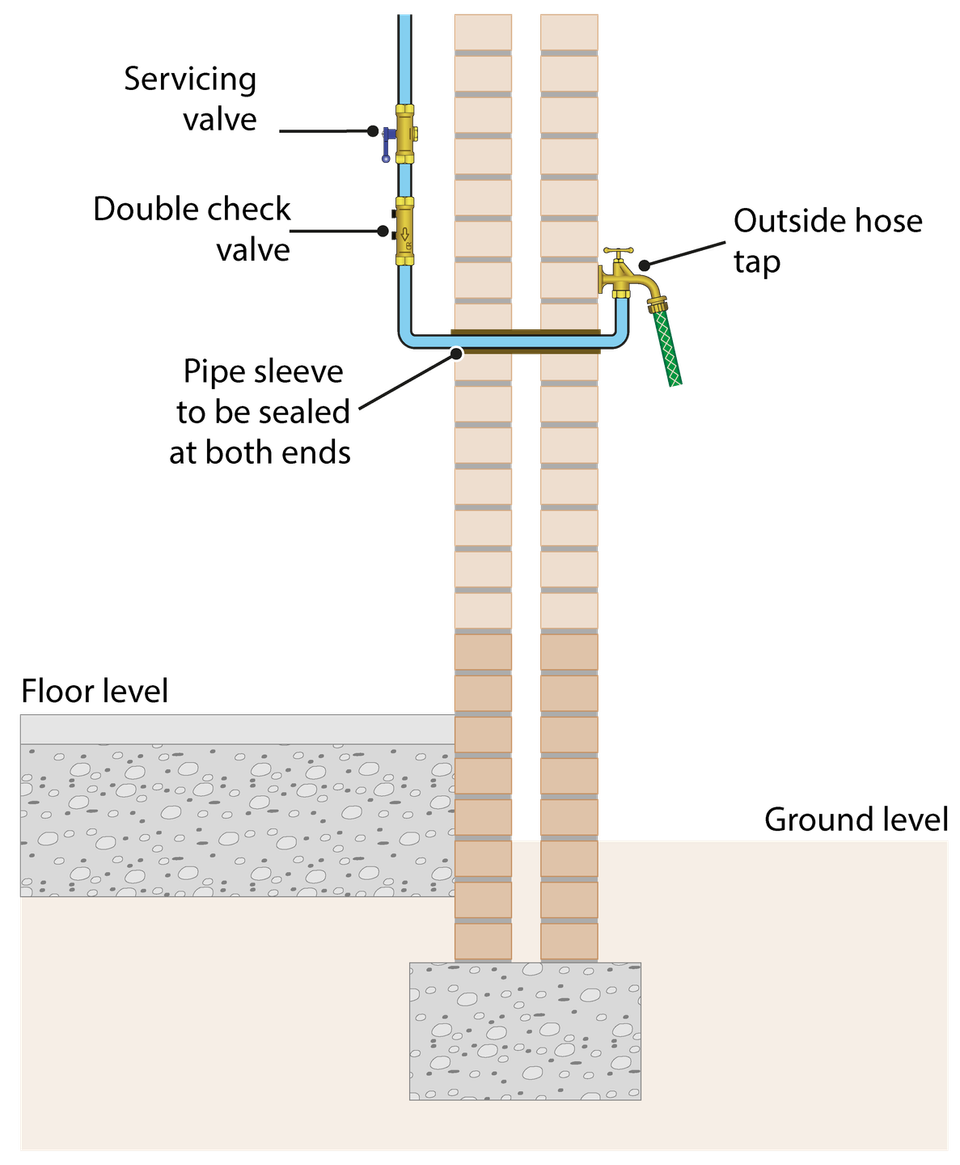
Hose union taps are typically categorised as a fluid category 3 or 5 risk. Below are some examples of backflow prevention which may be used where the hose union tap is categorised as either a fluid category 3 or 5 risk.
Example of fluid category 3 backflow protection arrangement

Example of fluid category 5 backflow protection arrangement

To improve this information please give us your feedback >
Uncontrolled if downloaded. This is informative, non-statutory guidance and intended for general guidance purposes only; it is subject to change.
Compliance with this information should not be relied upon as guaranteeing no enforcement action will be taken by water undertakers. Water Regs UK accepts no liability for loss, indirect or consequential loss arising from or in connection with this guidance document.
We use cookies to give you the best possible experience with Water Regs UK. Some are essential to provide website functions and ensure the website is secure. We also use cookies to help us understand how people use the site and to make improvements. Click "Accept All" to enable recommended settings or click "Manage cookies" to adjust your settings. For more details, see our Cookie Policy.