To prevent waste there needs to be provision to access any joints or water fittings which require maintenance, such as backflow prevention devices, valves which control the flow and any other operational fitting.
Joints on concealed pipework are likely to lose their integrity over time and therefore should only be considered where unavoidable.
Water fittings installed below or embedded in floors and installed in or behind wall finishes are considered to be concealed. Water fittings installed below ground, but not buried, such as in a chamber or basement room, or installed below floors or in walls, but which can be readily accessed, are not considered to be concealed.
All domestic hot and cold water system pipework concealed within walls should:
Be installed with a minimum number of joints. This is because joints are prone to a loss of integrity over time and therefore should only be considered where unavoidable.
Be installed in a chase/duct or void. Wrapping pipework in insulation is not an acceptable method of ducting or passing through a chimney is not an acceptable method of ducting.
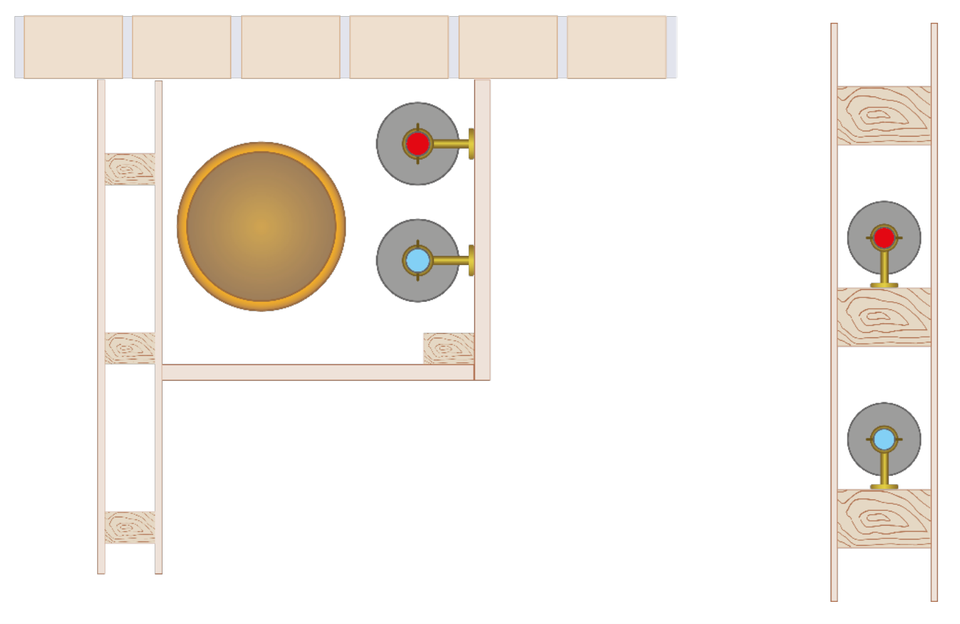
With the agreement of the local water undertaker pipework may be installed alongside other services in a shared duct. An example of what may be considered as acceptable is shown below.
Be appropriately clipped to avoid water hammer and other stresses which would affect the integrity of the installation.
Be insulated with a suitable distance maintained between the cold water, hot water and any other heat source to prevent heat transfer or loss.
Not be embedded or come into contact with other materials such as plaster or cement.
Be accessible to enable inspection and replacement. Further information about accessibility can be found in BS 8558.
Below are images illustrating domestic hot and cold water systems concealed in a wall and a soil pipe duct.
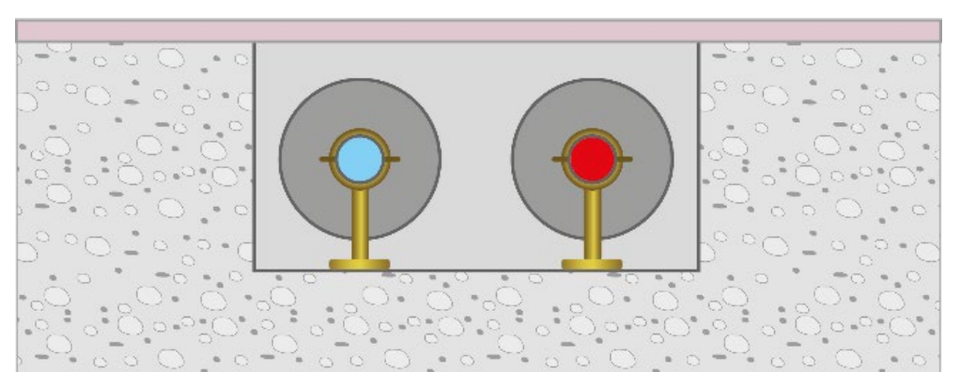
All domestic hot and cold water system pipework concealed within floors should:
Be installed with a minimum number of joints. This is because joints are prone to a loss of integrity over time and therefore should only be considered where unavoidable.
Be installed in a chase/duct or void. Wrapping pipework in insulation is not an acceptable method of ducting.
Be appropriately clipped to avoid water hammer and other stresses which would affect the integrity of the installation.
Be insulated with a suitable distance maintained between the cold water, hot water and any other heat source to prevent heat transfer or loss.
Not embedded or come into contact with other materials which could affect the integrity of the pipework system, such as backfill, screed or cement.
Be accessible to enable inspection and replacement. Further information about accessibility can be found in BS 8558.
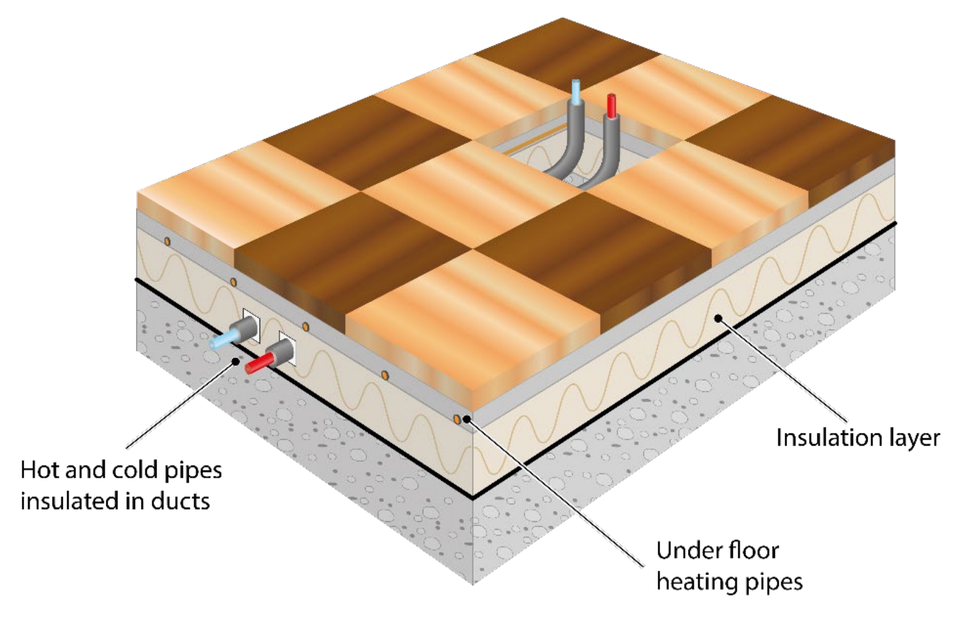
Underfloor heating systems should be installed in a manner considered to be acceptable to building control and the local water undertaker.
If domestic supplies are to be installed in close proximity to underfloor heating, they should:
Be installed as a single run of pipework without any inaccessible joints below the underfloor heating insulation.
To prevent heat transfer or loss any supply pipework should be laid with a suitable gap maintained between the hot and cold systems and both wrapped in insulation.
We use cookies to give you the best possible experience with Water Regs UK. Some are essential to provide website functions and ensure the website is secure. We also use cookies to help us understand how people use the site and to make improvements. Click "Accept All" to enable recommended settings or click "Manage cookies" to adjust your settings. For more details, see our Cookie Policy.