
Not necessarily. Product certification, whether it be under the Construction Products Regulations or by a product certification scheme, demonstrate a product conforms to either an appropriate British Standard* or the Regulators Specification for fittings and is therefore of an appropriate quality and standard.
However, this is only one requirement of the water fittings regulations, byelaws. When installed there will be others all of which have to be satisfied. Therefore, in isolation certification cannot be relied upon to guarantee compliance as where and how it will be installed and used is unknown.
Please note some schemes provide helpful installation advice this may highlight installation requirements likely to apply, but this might not be the case in all circumstances. The suitability of an installation is determined by the local water undertaker, who retains absolute discretion in assessing whether an installation is compliant.
For further information please refer to Regulation 4(1)(a) compliance guidance and BS 6920 Compliance Overview.
Any questions please contact the local water undertaker for advice.
*National specifications from other countries will be considered providing they provide an equivalent level of protection and performance
To improve this information please give us your feedback >
Uncontrolled if downloaded. This is informative, non-statutory guidance and intended for general guidance purposes only; it is subject to change.
Compliance with this information should not be relied upon as guaranteeing no enforcement action will be taken by water undertakers. Water Regs UK accepts no liability for loss, indirect or consequential loss arising from or in connection with this guidance document.
Backflow occurs when fluid flows in the opposite to the intended or normal direction of flow. There are two types of backflow, back pressure and back siphonage.
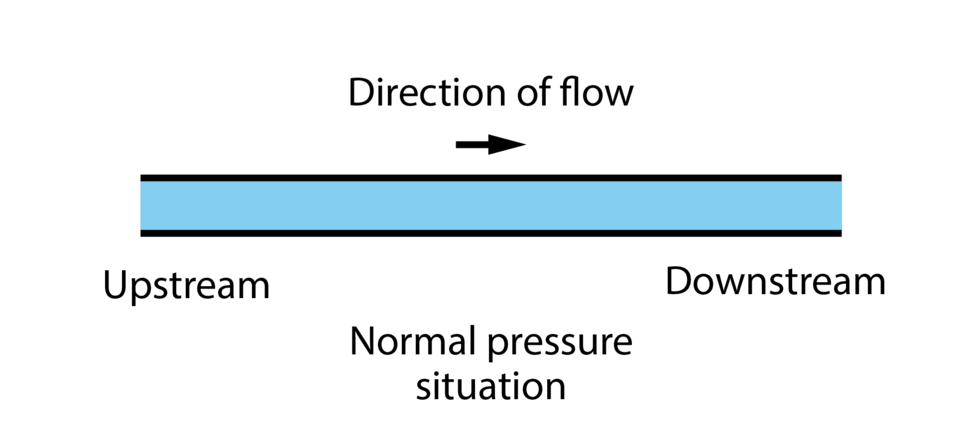
Backpressure: occurs when the pressure downstream increases above that of the supply pressure, in effect pushing fluids backwards against the intended or normal direction of flow.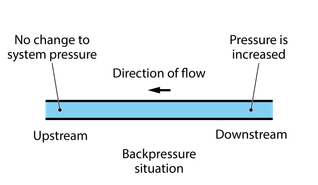 Back siphonage: occurs when the supply pressure drops below that of the system it is supplying creating a depressurisation or vacuum which pulls fluids backwards against the intended or normal direction of flow.
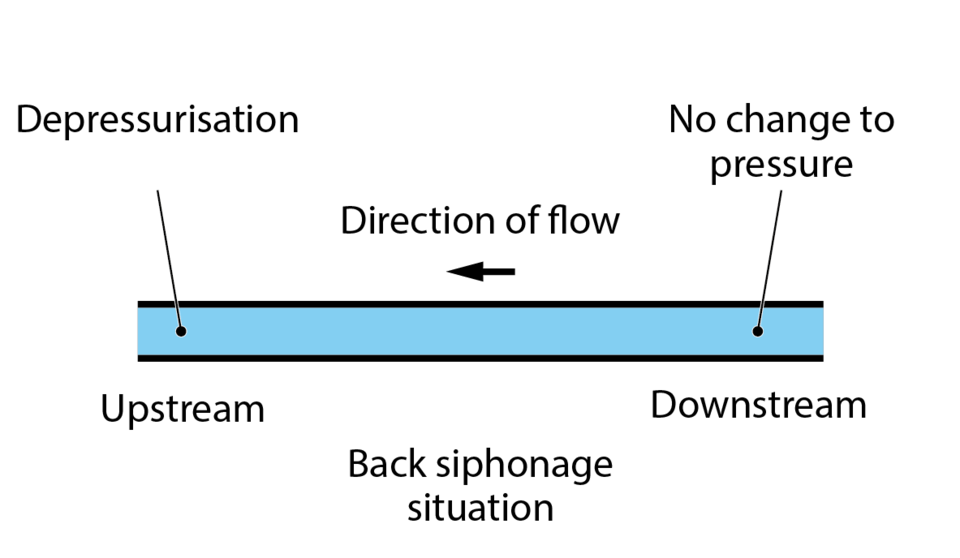 The type of backflow risk is dependent upon a number of factors. Good design and the installation of suitable backflow prevention arrangements are key to avoiding backflow, which is why notification is so important.
As the circumstances which could lead to backflow are a common occurrence across the UK, contamination of public water supplies by backflow of fluids from customers premises is not theoretical. It is an ever present threat to water quality and public health.
As there have been a number of serious contamination events across the UK water undertakers take their role in preventing such incidents very seriously. Where infringements are suspected or identified they will act, not only to protect water quality and public health, but also to support owners and occupiers of premises to meet their legal obligations.
Where contamination incidents occur, it is likely that enforcement action, including criminal proceedings, will be taken against those who fail to meet their legal obligations.
To improve this information please give us your feedback >
Uncontrolled if downloaded. This is informative, non-statutory guidance and intended for general guidance purposes only; it is subject to change.
Compliance with this information should not be relied upon as guaranteeing no enforcement action will be taken by water undertakers. Water Regs UK accepts no liability for loss, indirect or consequential loss arising from or in connection with this guidance document.
A Type AUK 3 tap gap is suitable for high risk installations (fluid category 5 or lower). It is a specific minimum distance between the lowest point of a tap spout, shower head or other fitting and the spillover level of the high risk appliance or receptable it supplies.
A Type AUK 3 tap gap is rated by the Regulators as suitable backflow protection against the highest level of contamination, fluid category 5 but for back siphonage only.
The requirements for a Type AUK3 tap gap are :
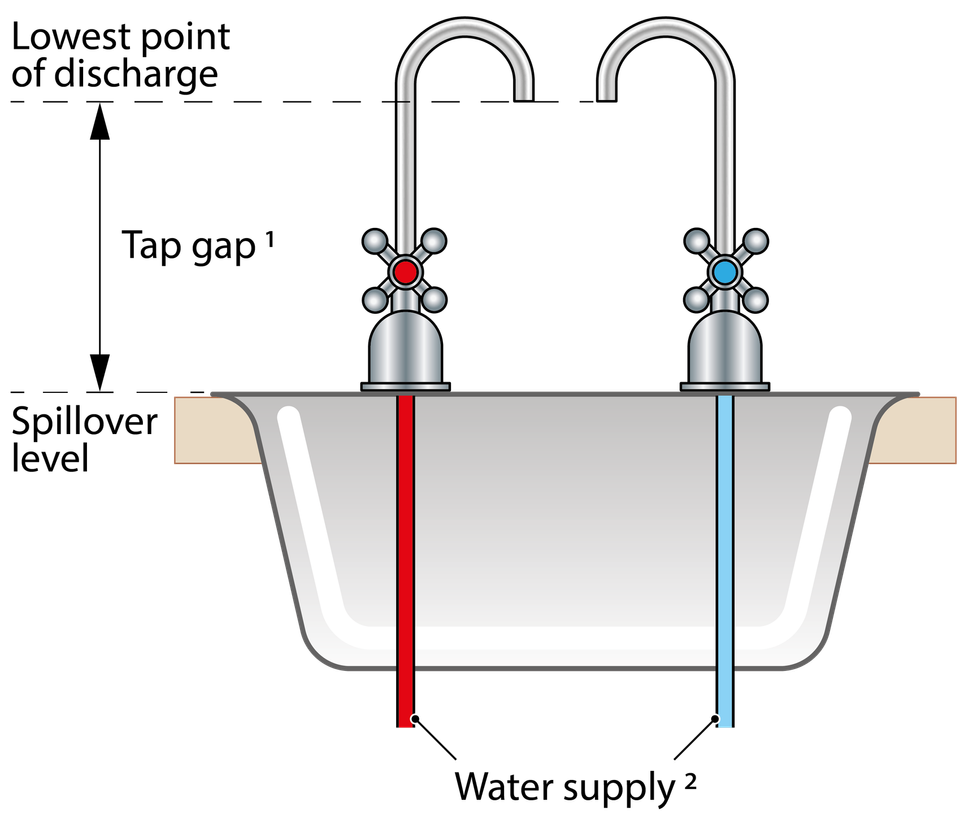
The tap gap is measured vertically from the lowest point of the outlet, which includes any aerator or flow straightener fitted, and the spillover level of whatever receptacle it supplies.
The gap required must be not less than 20 mm or twice the diameter of the inlet pipe supplying the installation whichever is the greater.
Where an AUK3 tap gap cannot be maintained, for example where the tap gap is compromised as a result of:-
the tap being lowered in any way;
adjustment to the spout which reduces the distance between the tap outlet and spillover level of the sink; or
the operation of a pull out hose attachment
An alternative form of fluid category 5 backflow protection is required.
To improve this information please give us your feedback >
Uncontrolled if downloaded. This is informative, non-statutory guidance and intended for general guidance purposes only; it is subject to change.
Compliance with this information should not be relied upon as guaranteeing no enforcement action will be taken by water undertakers. Water Regs UK accepts no liability for loss, indirect or consequential loss arising from or in connection with this guidance document.
Appliances incorporating or supplied via a pump, such as power showers and washing machines, should not be fed from pipework which also supplies high risk installations (fluid category risk 4 or 5) such as bidets adjacent to toilets
To improve this information please give us your feedback >
Uncontrolled if downloaded. This is informative, non-statutory guidance and intended for general guidance purposes only; it is subject to change.
Compliance with this information should not be relied upon as guaranteeing no enforcement action will be taken by water undertakers. Water Regs UK accepts no liability for loss, indirect or consequential loss arising from or in connection with this guidance document.
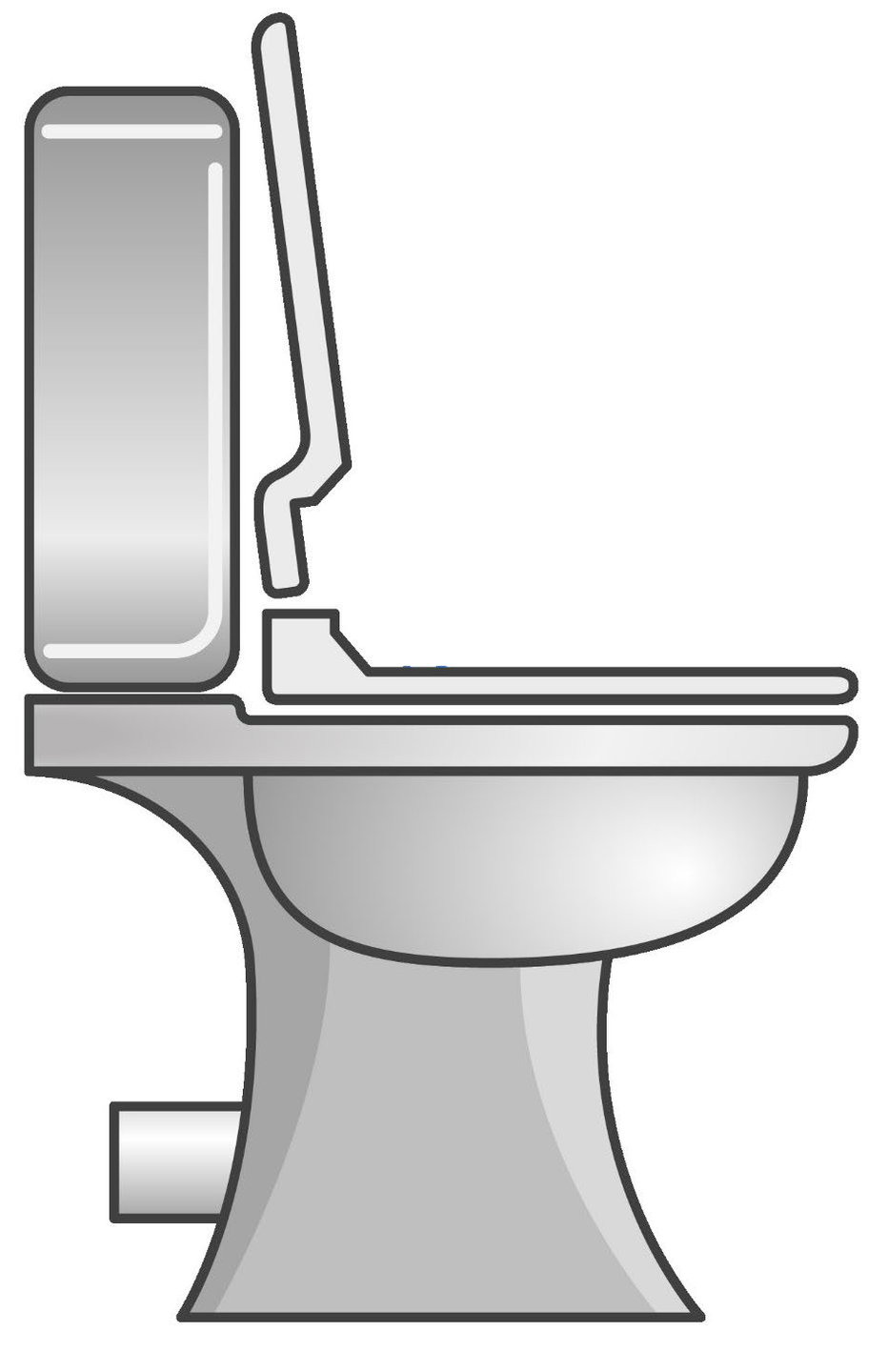
All water fittings in a bathroom must be supplied via an appropriate and adequate form of backflow protection, one which is rated either equal to or higher than the highest downstream contamination risk (fluid category) for the type of backflow (back pressure or back siphonage) it is likely to be exposed to.
A toilet is considered to be a fluid category 5 risk.
Typically, toilets have built in fluid category 5 protection such as a Type AUK1 backflow arrangement, but if not, they need to be supplied via a suitable backflow prevention arrangement offering fluid category 5 protection.
As some backflow prevention arrangements and devices have operational limitations you should always check with the local water undertaker to make sure they are suitable for the intended application.
For further information contact the local water undertaker.
To improve this information please give us your feedback >
Uncontrolled if downloaded. This is informative, non-statutory guidance and intended for general guidance purposes only; it is subject to change.
Compliance with this information should not be relied upon as guaranteeing no enforcement action will be taken by water undertakers. Water Regs UK accepts no liability for loss, indirect or consequential loss arising from or in connection with this guidance document.
All water fittings in a bathroom must be supplied via an appropriate and adequate form of backflow protection, one which is rated either equal to or higher than the highest downstream contamination risk (fluid category) for the type of backflow (back pressure or back siphonage) it is likely to be exposed to.
Urinals are considered to be a fluid category 5 risk.

1. A pressure flushing valve and Type DC device arrangement installed in accordance with the requirements of schedule 2 paragraph 25(c) in the relevant legislation in England, Wales, Scotland and Northern Ireland.
2. A flushing cistern which is supplied via an appropriate form of fluid category 5 backflow protection.


To improve this information please give us your feedback >
Uncontrolled if downloaded. This is informative, non-statutory guidance and intended for general guidance purposes only; it is subject to change.
Compliance with this information should not be relied upon as guaranteeing no enforcement action will be taken by water undertakers. Water Regs UK accepts no liability for loss, indirect or consequential loss arising from or in connection with this guidance document.
All water fittings in a bathroom must be supplied via an appropriate and adequate form of backflow protection, one which is rated either equal to or higher than the highest downstream contamination risk (fluid category) for the type of backflow (back pressure or back siphonage) it is likely to be exposed to.
Bidet showers/douches adjacent to toilets are considered to be a fluid category 5 risk meaning both the cold water, and where appropriate hot water, must be supplied via a suitable form of fluid category 5 backflow prevention, for example via a break tank arrangement incorporating a Type AB air gap.
The installation of a bidet shower/douche is notifiable in Scotland and Northern Ireland and could be notifiable, for example as material change of use, in England and Wales. If notification is not required, for example because it is undertaken by an approved contractor, there remains a legal obligation for the premises owner or occupier to ensure the plumbing work is fully compliant with the water fittings regulations, byelaws in Scotland.
Providing the water is not to be used for drinking, cooking or any other forms of washing, the local water undertaker may be willing to consider permitting under conditional consent the use of the same dedicated fluid category 5 backflow protection and distribution arrangement to supply multiple bidet shower arrangements or another bidet, toilet or urinal in the same bathroom. Please note this will be dependent upon advanced notification of any proposed installation, including any to be completed by an approved contractor.

To improve this information please give us your feedback >
Uncontrolled if downloaded. This is informative, non-statutory guidance and intended for general guidance purposes only; it is subject to change.
Compliance with this information should not be relied upon as guaranteeing no enforcement action will be taken by water undertakers. Water Regs UK accepts no liability for loss, indirect or consequential loss arising from or in connection with this guidance document.

All water fittings in a bathroom must be supplied via an appropriate and adequate form of backflow protection, one which is rated either equal to or higher than the highest downstream contamination risk (fluid category) for the type of backflow (back pressure or back siphonage) it is likely to be exposed to.
A combined toilet and bidet is considered to be a fluid category 5 risk.
The installation of a combined toilet and bidet is notifiable in Scotland and Northern Ireland and could be notifiable in England and Wales as either a bidet or a material change of use. If notification is not required, for example because it is undertaken by an approved contractor, there remains a legal obligation for the premises owner or occupier to ensure the plumbing work is fully compliant with the water fittings regulations, byelaws in Scotland.
Some combined toilet and bidets incorporate backflow protection. Where this is the case, it is essential to confirm it meets all UK requirements, which is why it is so important to take advantage of the notification check offered by water undertakers.
If there is no acceptable built in backflow protection the installation must be supplied via a suitable form of fluid category 5 backflow prevention, for example via a break tank arrangement incorporating a Type AB air gap.
To improve this information please give us your feedback >
Uncontrolled if downloaded. This is informative, non-statutory guidance and intended for general guidance purposes only; it is subject to change.
Compliance with this information should not be relied upon as guaranteeing no enforcement action will be taken by water undertakers. Water Regs UK accepts no liability for loss, indirect or consequential loss arising from or in connection with this guidance document.
All water fittings in a bathroom must be supplied via an appropriate and adequate form of backflow protection, one which is rated either equal to or higher than the highest downstream contamination risk (fluid category) for the type of backflow (back pressure or back siphonage) it is likely to be exposed to.
Typically, bidets are considered to be a fluid category 5 risk, but some designs may be categorised as fluid category 3 in situations where the risk is considered to be lower, for example bidets supplied via taps above the spill over level in typical homes. It is however ultimately for the local water undertaker to determine what level of backflow protection is required.
The installation of a bidet with a hose handset or ascending spray (water outlet submerged i.e. below the bidet spill over level) is notifiable.
If notification is not required, for example because the work is undertaken by an approved contractor, there remains a legal obligation for the premises owner or occupier to ensure the plumbing work is fully compliant with the water fittings regulations, byelaws in Scotland.
Acceptable methods of backflow protection for bidets include:

Both the cold, and where appropriate hot water, supply to a bidet must be supplied via a suitable fluid category 5 backflow prevention arrangement. For example, a break tank incorporating a Type AB air gap.

Providing an acceptable gap can be maintained between the lowest point of the tap outlet and spill over level of the bidet no additional backflow protection is required unless using a mixer tap which combines hot and cold water within the spout (single flow).
The gap required between the tap outlet and bidet spill over level will vary depending upon both the diameter of the pipework supplying the tap(s) and whether the bidet is fluid category 5 (Type AUK3 tap gap) or fluid category 3 (Type AUK2 tap gap).
If the bidet is supplied using single flow mixer tap (as opposed to a dual or bi-flow tap which has separate water paths to the end of the spout) in addition to maintaining the required tap gap single check valves will need to be installed on the pipework supplying the tap. This is to prevent cold water pressurising the hot water and hot water accessing the cold water mains supply under fault conditions.
If the outlet can become submerged, or the required tap gap cannot be maintained, the bidet must be supplied via a suitable form of fluid category 5 backflow protection.
Tap connection size | Minimum tap gap |
Up to and including 15 mm (½”) | 20 mm |
Larger than 15 mm (½”) but smaller than 20 mm (¾”) | 25 mm |
20 mm (¾”) or larger | 70 mm |
20 mm or twice the internal diameter of the tap connection whichever is the greater
For example: tap or shower size | minimum tap gap |
8 mm | 20 mm |
10 mm | 20 mm |
12 mm | 24 mm |
15 mm | 30 mm |
20 mm | 40 mm |
25 mm | 50 mm |
To improve this information please give us your feedback >
Uncontrolled if downloaded. This is informative, non-statutory guidance and intended for general guidance purposes only; it is subject to change.
Compliance with this information should not be relied upon as guaranteeing no enforcement action will be taken by water undertakers. Water Regs UK accepts no liability for loss, indirect or consequential loss arising from or in connection with this guidance document.
All water fittings in a bathroom must be supplied via an appropriate and adequate form of backflow protection, one which is rated either equal to or higher than the highest downstream contamination risk (fluid category) for the type of backflow (back pressure or back siphonage) it is likely to be exposed to.
Although ultimately it is for the local water undertaker to determine what level of backflow protection is required, showers in low risk environments, for example a typical home may be categorised as a fluid category 3 risk, whereas those installed in high risk situations, such as health care premises are a fluid category 5 risk.
If the installation of the shower is notifiable installation advice should be provided as part of the notification process.
If it is not notifiable there remains a legal obligation for the premises owner or occupier to ensure the plumbing work is fully compliant with the water fittings regulations, byelaws in Scotland.
Acceptable methods of backflow protection for showers include:
In all premises a shower arrangement (including those combined with fixed shower head outlets) with a hose handset capable of reaching into a toilet bowl or bidet (irrespective of the bidet design) is considered to be a fluid category 5 risk.
This means unless the shower hose can be permanently restrained or shortened to achieve a specific gap, known as a Type AUK3 tap gap, between the hose handset and spill over level of the toilet or bidet, all water supplies to the shower must be supplied via a suitable fluid category 5 backflow prevention arrangement. For example, a break tank arrangement incorporating a Type AB air gap.

The hose handset being able to reach into a toilet bowl or bidet is not the only contamination risk of concern, preventing backflow from:
water from the bath or shower tray via the hose; and
either the cold or hot water supplies to the shower valve under fault conditions also needs to be addressed.
Typically, the risk of back siphonage of water in the bath or shower tray is tackled by ensuring the hose handset also maintains a suitable tap gap above the spill over level of the bath or shower tray. This gap will vary depending upon both the diameter of the pipework supplying the shower and whether the installation is fluid category 5 (Type AUK3 tap gap) or fluid category 3 (Type AUK2 tap gap).
If the shower handset cannot maintain the required tap gap then alternative backflow protection appropriate to the risk associated with the shower installation is needed.
The risk of cold water pressurising the hot water and hot water accessing the cold water mains supply under fault conditions is usually addressed by the installation of single check valves on the supplies to the shower valve. In the case of fluid category 3 shower installations if double check valves are fitted on the supply to the shower valve this would also address back siphonage via the hose where the required tap gap could not be maintained.
Fluid category 3: Type AUK2 tap gap
Tap or shower connection size | Minimum tap gap |
Up to and including 15 mm (½”) | 20 mm |
Larger than 15 mm (½”) but smaller than 20 mm (¾”) | 25 mm |
20 mm (¾”) or larger | 70 mm |
Fluid category 5 : Type AUK3 tap gap
20 mm or twice the internal diameter of the tap or shower connection whichever is the greater
For example: tap or shower size | minimum tap gap |
8 mm | 20 mm |
10 mm | 20 mm |
12 mm | 24 mm |
15 mm | 30 mm |
20 mm | 40 mm |
25 mm | 50 mm |
As with showers hoses it is important to address the risk of backflow of the bath or shower water via any fixed shower outlets as well as supplies to the shower valve.
The information relating to these two concerns given above also applies to these types of showers, but in the case of fixed shower heads the gap is measured between the lowest point of the shower head and spill over level of the bath or shower tray

To improve this information please give us your feedback >
Uncontrolled if downloaded. This is informative, non-statutory guidance and intended for general guidance purposes only; it is subject to change.
Compliance with this information should not be relied upon as guaranteeing no enforcement action will be taken by water undertakers. Water Regs UK accepts no liability for loss, indirect or consequential loss arising from or in connection with this guidance document.
All water fittings in a bathroom must be supplied via an appropriate and adequate form of backflow protection, one which is rated either equal to or higher than the highest downstream contamination risk (fluid category) for the type of backflow (back pressure or back siphonage) it is likely to be exposed to.
The backflow risks associated with bath and basin taps will vary dependent upon their use (intended or otherwise) and the environment in which they are sited.
Although ultimately it is for the local water undertaker to determine what level of backflow protection is required, typically bath and basin taps used in domestic premises are categorised as a fluid category 3 risk, whereas those installed non-domestic premises can be a fluid category 5 risk.
There are a number of ways in which to prevent backflow via a tap, one of the most commonly used forms being a tap gap. A tap gap is a ‘gap’ between the lowest point of the tap outlet and spill over level of the bath, basin or bidet, the size of which varies depending upon the diameter of the pipe supplying the tap. If a tap gap cannot be maintained or the outlet is submerged, appropriate backflow protection is required. In domestic properties a double check valve is typically used.

Fluid category 3: Type AUK2 tap gap
Tap connection size | Minimum tap gap |
Up to and including 15 mm (½”) | 20 mm |
Larger than 15 mm (½”) but smaller than 20 mm (¾”) | 25 mm |
20 mm (¾”) or larger | 70 mm |
Fluid category 5 : Type AUK3 tap gap
20 mm or twice the internal diameter of the tap connection whichever is the greater
For example: tap size | minimum tap gap |
8 mm | 20 mm |
10 mm | 20 mm |
12 mm | 24 mm |
15 mm | 30 mm |
20 mm | 40 mm |
25 mm | 50 mm |
Please note if tap is a single flow mixer tap (as opposed to a dual or bi-flow tap which has separate water paths to the end of the spout) in addition to maintaining the required tap gap single check valves will need to be installed on the pipework supplying the tap. This is to prevent cold water pressurising the hot water and hot water accessing the cold water mains supply under fault conditions.
If the installation is notifiable installation advice should be provided as part of the notification process.
If it is not notifiable there remains a legal obligation for the premises owner or occupier to ensure the plumbing work is fully compliant with the water fittings regulations, byelaws in Scotland.
To improve this information please give us your feedback >
Uncontrolled if downloaded. This is informative, non-statutory guidance and intended for general guidance purposes only; it is subject to change.
Compliance with this information should not be relied upon as guaranteeing no enforcement action will be taken by water undertakers. Water Regs UK accepts no liability for loss, indirect or consequential loss arising from or in connection with this guidance document.
All water fittings in a bathroom must be supplied via an appropriate and adequate form of backflow protection, one which is rated either equal to or higher than the highest downstream contamination risk (fluid category) for the type of backflow (back pressure or back siphonage) it is likely to be exposed to.
The backflow risks associated with a spa bath will vary dependent upon its design, use (intended or otherwise) and the environment in which it is sited. As they are potentially a fluid category 5 risk the local water undertaker should be contacted prior to installation.
To improve this information please give us your feedback >
Uncontrolled if downloaded. This is informative, non-statutory guidance and intended for general guidance purposes only; it is subject to change.
Compliance with this information should not be relied upon as guaranteeing no enforcement action will be taken by water undertakers. Water Regs UK accepts no liability for loss, indirect or consequential loss arising from or in connection with this guidance document.
All water fittings in a bathroom must be supplied via an appropriate and adequate form of backflow protection, one which is rated either equal to or higher than the highest downstream contamination risk (fluid category) for the type of backflow (back pressure or back siphonage) it is likely to be exposed to.
Bathing equipment in a nursing or care environment is considered to be a fluid category 5 risk. The supplies to all taps and showers outlets must be protected by a suitable form of fluid category 5 backflow protection. In practice this means being supplied from storage incorporating an adequate air gap (such as a Type AB air gap) or by maintaining a gap between a tap and shower outlet and spill over level of 20 mm or twice the diameter of the supply pipe (whichever is the greater) measured as shown below.


Fluid category 5 : Type AUK3 tap gap
20 mm or twice the internal diameter of the tap or shower connection whichever is the greater
For example: tap or shower size | minimum tap gap |
8 mm | 20 mm |
10 mm | 20 mm |
12 mm | 24 mm |
15 mm | 30 mm |
20 mm | 40 mm |
25 mm | 50 mm |
Please refer to the assisted bathing equipment leaflet for additional information.
To improve this information please give us your feedback >
Uncontrolled if downloaded. This is informative, non-statutory guidance and intended for general guidance purposes only; it is subject to change.
Compliance with this information should not be relied upon as guaranteeing no enforcement action will be taken by water undertakers. Water Regs UK accepts no liability for loss, indirect or consequential loss arising from or in connection with this guidance document.
We use cookies to give you the best possible experience with Water Regs UK. Some are essential to provide website functions and ensure the website is secure. We also use cookies to help us understand how people use the site and to make improvements. Click "Accept All" to enable recommended settings or click "Manage cookies" to adjust your settings. For more details, see our Cookie Policy.